
Digital Marketing vs Traditional Marketing: Which Wins in 2026?
September 22, 2026 2026-09-22 3:27Digital Marketing vs Traditional Marketing: Which Wins in 2026?
Digital Marketing vs Traditional Marketing: Which Wins in 2026?
 admin
admin “Digital marketing vs traditional marketing: explore key differences in cost, reach, targeting & ROI to choose the right strategy for your business in 2026.”
Every business owner eventually asks the same question: should I invest in digital marketing or stick with traditional marketing? The debate between digital marketing vs traditional marketing has been going on for over a decade, but the answer today looks very different from what it did even five years ago. Understanding the strengths, weaknesses, and ideal use cases of each approach can help you build a marketing strategy that actually delivers results.
What Is Traditional Marketing?
Traditional marketing refers to the offline promotional methods businesses have used for decades — television commercials, radio ads, newspaper listings, billboards, flyers, and direct mail. It relies on one-way communication: a brand broadcasts a message to a wide audience, hoping it resonates with the right people.
For years, traditional marketing was the only real option available. Local businesses depended on newspaper ads and word-of-mouth referrals, while larger brands poured budgets into television and radio campaigns. Even now, traditional marketing hasn’t disappeared — it still plays a role in industries like real estate, automotive, and local retail, where physical presence and community trust matter.
What Is Digital Marketing?
Digital marketing, on the other hand, covers all promotional activities carried out through online channels — search engines, social media, email, websites, and mobile apps. It includes SEO, pay-per-click advertising, content marketing, influencer collaborations, and email campaigns.
Unlike traditional marketing, digital marketing allows for two-way interaction. Customers can comment, share, ask questions, and engage directly with brands in real time. This shift from broadcasting to conversation is one of the biggest differences when comparing digital marketing vs traditional marketing.
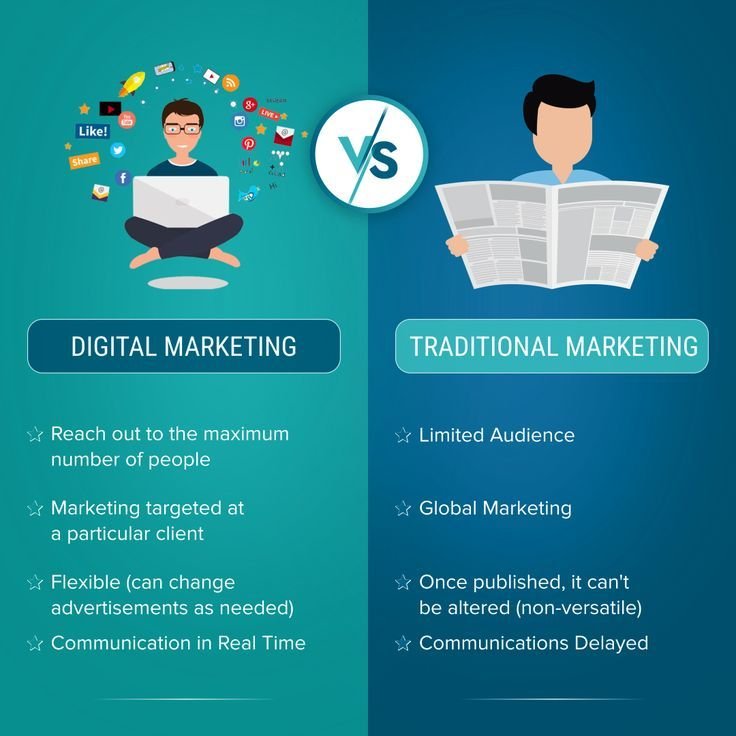
Key Differences Between Digital Marketing and Traditional Marketing
1. Cost and Accessibility
Traditional marketing often requires a large upfront budget. A single television slot or a full-page newspaper ad can cost thousands of dollars, putting it out of reach for small businesses. Digital marketing, in comparison, is far more accessible. A small business can run a social media ad campaign for a fraction of the cost and still reach a highly targeted audience.
2. Targeting and Personalization
This is where digital marketing clearly outperforms traditional methods. Platforms like Google Ads and Facebook Ads let you target audiences based on age, location, interests, browsing behavior, and even purchase history. Traditional marketing, by contrast, casts a wide net — a billboard on a highway or a radio ad reaches everyone within range, regardless of whether they’re interested in your product.
3. Measurability
One of the strongest arguments in the digital marketing vs traditional marketing debate is measurability. With digital campaigns, you can track clicks, impressions, conversions, and ROI in real time using tools like Google Analytics. Traditional marketing offers no such precision — it’s nearly impossible to know exactly how many people saw a billboard or acted on a newspaper ad.
4. Reach and Speed
Digital campaigns can go live within minutes and reach a global audience instantly. Traditional marketing campaigns, on the other hand, take longer to plan, print, or broadcast, and their reach is usually limited to a specific geographic area unless the budget is substantial.
5. Engagement and Interaction
Digital marketing thrives on engagement. Comments, likes, shares, and direct messages create a sense of community around a brand. Traditional marketing lacks this interactive element entirely — it’s a monologue rather than a dialogue.
6. Longevity and Trust
Traditional marketing still holds an edge in one area: trust. Many consumers, especially older demographics, view print ads, TV commercials, and radio spots as more credible than online ads. A brand’s physical presence — a local hoarding, a printed brochure, a newspaper feature — can build a sense of permanence and legitimacy that digital ads sometimes struggle to replicate.
Which One Should You Choose?
The truth is, the digital marketing vs traditional marketing conversation isn’t really about picking a winner — it’s about finding the right mix for your business goals, audience, and budget.
- Choose digital marketing if you want measurable results, precise targeting, lower costs, and faster campaign turnaround. It’s ideal for businesses looking to scale quickly, run performance-based campaigns, and build long-term customer relationships through content and engagement.
- Choose traditional marketing if your target audience is largely local, older, or less active online, or if you want to build brand credibility through physical presence in your community.
- Combine both for maximum impact. Many successful businesses use an omnichannel approach — running digital ads alongside local print or radio campaigns — to reinforce brand recall across multiple touchpoints.
The Verdict
As consumer behavior continues shifting toward online platforms, digital marketing has become the dominant force in most industries. It offers better ROI tracking, precise audience targeting, and the flexibility to adjust campaigns on the fly — advantages traditional marketing simply cannot match. However, traditional marketing hasn’t become obsolete. For certain industries and demographics, it still delivers strong results, especially when it comes to building local trust and brand recognition.
Ultimately, the smartest approach in the digital marketing vs traditional marketing debate isn’t choosing one over the other — it’s understanding your audience well enough to know where they spend their time and attention, and meeting them there. For most modern businesses, that means leading with digital marketing while using traditional channels strategically to support brand visibility.